Most struggling manuscripts don't have a plot problem. They have a chain problem. Somewhere between the character you love and the ending you imagined, one link broke and the whole story went slack. The Story Chain is a story structure framework for fiction that names those links, shows how they connect, and gives you a practical way to test each one in your manuscript.
Whether you're drafting chapter one or deep in revision, this framework works as a planning tool and a diagnostic.
What Is the Story Chain?
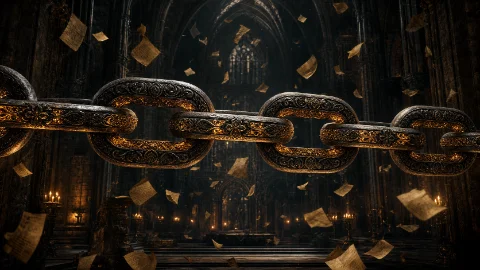
The Story Chain is a six-part framework that holds every effective piece of fiction together. The six links are: Character, Desire, Stakes, Obstacles, Climax, and Resolution.
What makes it a chain rather than a checklist is that each link depends entirely on the one before it. You can't have meaningful stakes without desire. You can't have a resonant climax without stakes. Pull any link out, and the story collapses.
If your reader loses interest or stops caring, the fault almost always lives in one of these six places.
Link 1: Character
The chain begins with a person, not a premise.
Many writers start with a cool idea: a heist, a prophecy, a mysterious stranger. But ideas don't make readers turn pages. People do. A fully realized character, someone with a specific history, a wound they haven't acknowledged, and a habit they can't break, gives every other link its weight.
Your character doesn't need to be likable. They need to be knowable.
Worksheet questions for writers:
What does your protagonist believe about themselves that isn't entirely true?
What specific moment in their past shaped the flaw or fear they're carrying into this story?
Link 2: Desire
Once you have a character, you need to know what they want. "Want" has two layers in fiction, and both must exist.
External want is the visible goal: win the case, find the killer, survive the apocalypse. It gives the plot its direction and your reader a question to follow.
Internal need is the deeper truth the character hasn't faced yet: the capacity for forgiveness they've buried, the self-worth they've surrendered, the connection they've refused. The internal need is what the story is actually about, even if the character never frames it that way.
Strong fiction operates on both levels. The external goal pulls the reader forward. The internal need makes them care.
Worksheet questions for writers:
What is your protagonist's external goal? Can you state it in one sentence?
What do they need emotionally that they either don't want or don't yet know they need?
Does your story's ending deliver on both the external want and the internal need, even if they resolve in opposite directions?
The gap between want and need is where your story's meaning lives.
Link 3: Stakes
Stakes answer the question every reader is always silently asking: so what?
Stakes are what your character stands to lose if they fail, not in the abstract but in the specific, felt, personal sense. A character who might lose "everything" risks nothing; "everything" is too vague to feel. A character who might lose the last person who believed in them lands differently.
External stakes are the plot-level consequences: life or death, freedom or imprisonment, love won or lost. Internal stakes are what failure would confirm about the character: that they were never enough, that they can't be trusted, that they will always be alone. When both layers are present, readers feel the threat.
Worksheet questions for writers:
If your protagonist fails, what specifically do they lose in the external world?
What does failure confirm about them internally? What story about themselves would it prove true?
Link 4: Obstacles
Obstacles are what stand between your character and their desire. They must escalate, and they must be of two kinds.
Internal obstacles are the character's own limitations: fear, self-deception, a harmful belief. These are rooted in the wound you identified at Link 1, and they make the story personal.
External obstacles are the forces in the world working against them: an antagonist with genuine power, a rigged system, a circumstance that arrives at the worst possible moment.
The best fiction braids these two together. The moment the antagonist corners your protagonist is also the moment their deepest fear speaks loudest. Each attempt should either fail or succeed in a way that creates a new, larger problem. Same-sized obstacles flatline a story.
Worksheet questions for writers:
List your protagonist's three biggest obstacles. Are any of them purely external with no internal dimension?
Does each obstacle escalate in severity or complexity as the story moves forward?
At what point do the internal and external obstacles collide most directly?
Link 5: Climax
The climax is where every link in the chain pulls tight at once.
It is not the loudest scene. It is the most irreversible one. The climax is the single moment where your character, carrying their desire and weighted by their stakes, faces the full force of their obstacles and makes a decision they cannot take back.
A good climax forces the character to use something they just developed, or face something they have been avoiding the entire story. It must feel both surprising and inevitable: surprising because something shifts, inevitable because it could only ever have ended here.
A climax without a genuine internal shift is just an action sequence. Explosions don't make climaxes. Choices do.
Worksheet question for writers:
In your climax scene, what does your protagonist choose, and what does that choice say about who they have become?
Link 6: Resolution
The resolution is not the ending. It's the answer.
At the start of your story, the chain posed a question rooted in your character's desire and wound. The resolution is where that question gets answered, not explained. An explained resolution tells the reader what it all meant. An earned resolution shows it, through a specific image or action that crystallizes the change without commentary.
The resolution doesn't have to be happy. It has to be honest. If your protagonist grew, show it. If they failed to grow, that's a valid answer too, as long as it was earned.
Worksheet question for writers:
What question does your opening pose, and does your resolution answer it directly?
The Character Chain Inside the Story Chain
Inside every Story Chain is a smaller, tighter chain that belongs to the protagonist's internal life.
The character enters carrying a wound and a belief built around it. That belief shapes their desire. Their obstacles keep forcing that belief into conflict. The climax is when they either act from the old belief or break from it. The resolution shows who they are after.
This internal arc is not separate from the plot. It is the plot, wearing different clothes. When it genuinely intersects with the external chain, readers feel it as meaning. When they run parallel but never meet, the story feels hollow even when the plot is busy.
Using the Story Chain as a Diagnostic Tool
If your story feels stuck or flat, work through each link in order and ask whether it is fully formed:
Character: Is this person specific enough to be irreplaceable?
Desire: Are both the external want and the internal need present and distinct?
Stakes: Can you name what they lose, concretely, if they fail?
Obstacles: Do they escalate, with both an internal and external dimension?
Climax: Is there one single irreversible moment of decision or action?
Resolution: Does it answer the story's opening question without explaining it?
The weakest link is usually where the story started to feel like work to write. Flat middles almost always trace back to stakes that aren't specific enough. Unsatisfying endings almost always trace back to a climax that didn't demand a genuine internal shift.
Practical Worksheet: Test Your Own Story Chain
Answer each honestly, in a single sentence if you can.
Who is your protagonist, and what specific belief do they hold that this story will test?
What do they want in concrete, external terms?
What do they need emotionally that they aren't pursuing?
What is the most painful thing they would lose if they fail?
What internal obstacle keeps them from pursuing their desire directly?
What is the most powerful external obstacle they face, and who controls it?
Do your obstacles escalate from page one to the climax?
What decision does your protagonist make at the climax that they could not have made at the start?
What does your resolution show, without stating, about who your protagonist has become?
Read your opening page and your final page side by side. Do they feel like the same story?
If any of these produce a blank or vague answer, that's your next revision target.
FAQ: The Story Chain for Indie Authors
Q: Do all genres need the same Story Chain structure?
The six links apply across all fiction genres, but the weight each carries shifts. Literary fiction leans hard on the internal arc. Thrillers push external stakes and obstacles forward. Romance centers desire and the internal obstacle. The chain stays the same; the emphasis moves.
Q: What if my story has multiple protagonists?
Give each protagonist their own Story Chain, then weave the chains together so the climax of one affects the climax of another.
Q: My plot feels fine but my story feels empty. Which link is broken?
Almost certainly Link 2 or Link 3. A plot that works mechanically but feels empty usually has no internal layer in the desire, or stakes that are high in concept but not personal enough to feel real.
Q: Can the internal and external desires conflict with each other?
They should. The most compelling stories put the character in a position where getting the external want costs them the internal need, or vice versa. That tension is what the climax resolves.
Q: My resolution feels flat even though the climax worked. Why?
The change from the climax probably hasn't been shown yet. Find one specific image or action in your final pages that embodies who your protagonist has become. You don't need many words. You need the right ones.
Q: Does every link have to be planned before drafting?
Not at all. Many writers discover the chain in revision. The diagnostic value is the same either way.
Build the Chain, Then Pull It Tight
The Story Chain is not a formula. It's a way of thinking about what your story is made of and whether the pieces connect.
Start with a person who feels real. Give them something they want and something they need. Make the cost of failure personal and specific. Put obstacles in their path that force them to confront who they are. Drive everything toward one irreversible moment of choice. Then show, quietly and honestly, who they are after it.
When every link holds, readers feel it. Not as structure. As story.
Go back to your manuscript today and answer the first three worksheet questions. If the answers come easily, your foundation is solid. If they don't, you've just found where to start.