The Importance of Pacing
Understanding what pacing means for the writer--experienced or beginning.
Author-written articles on reading habits, book culture, writing life, and indie publishing. Fresh perspectives from the community, every week.
Understanding what pacing means for the writer--experienced or beginning.
One of the interesting things about writing a novel set somewhere you've actually lived is discovering just how much you've forgotten.
What if all the time we spend playing video games isn’t really wasted time? What if some of the things we learn while playing could actually become useful in the real world?
It was Napolean, who purportedly proclaimed, “Give me forty men who are not afraid of death, and I will conquer the world”, but Muhammad dextrously perfected the psychic route to metamorphose his folks into fidayeen on Islam’s jihadi path. Though he did so in order to make them cement his political lanes, the mullahs allude the same as Allah-perfected Islamic path to paradise.
I don't have to justify every conversation or every fictional event against some historical record. There are facts I want to get right, certainly. But the most important thing is still the story.
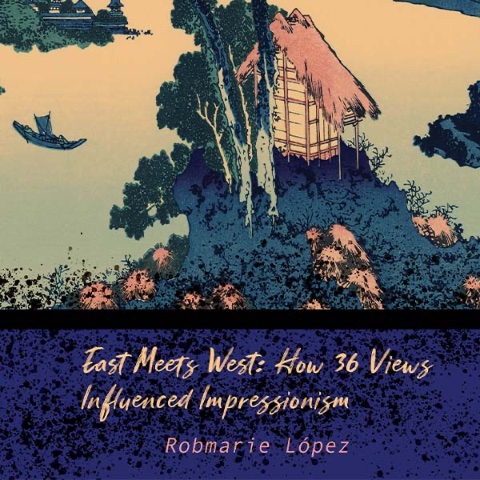
From Hokusai to Monet & Beyond: How 36 Views Shaped ImpressionismIf you are an otaku or an amateur impressionist connoisseur, you probably know that the art…
To be a writer means to be a target of constant scamming. Here are the latest tricks scammers are using.
What is amusing is that Christians and Muslims, whose God is not clear about the creation of man (see the tailpiece) seek to emancipate the Hindus whose progenitors had propositioned that it’s man who created the god, in theories many, as expostulated in the Brihadāranyaka Upanishad, composed around 700 B.C.E. Here’s is an excerpt from Valerie J. Roebuck’s The Upanisads, just to cite one such.
Andromidus: a Bond of Brothers Techno Thriller
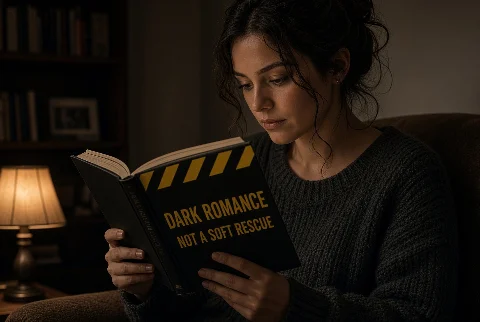
What “dark” actually means on the cover, so people stop downloading the wrong book and then not reviewing it.
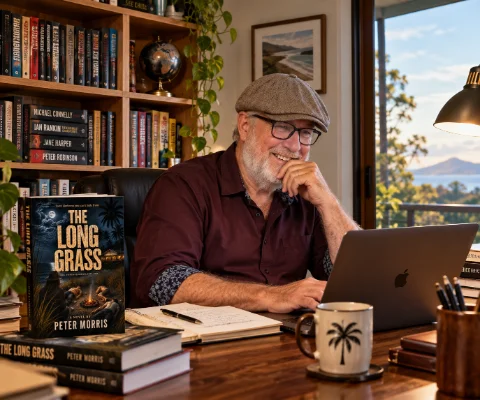
I didn’t set out to become a novelist in my sixties. But discovering writing later in life has turned out to be one of the most rewarding surprises of all.
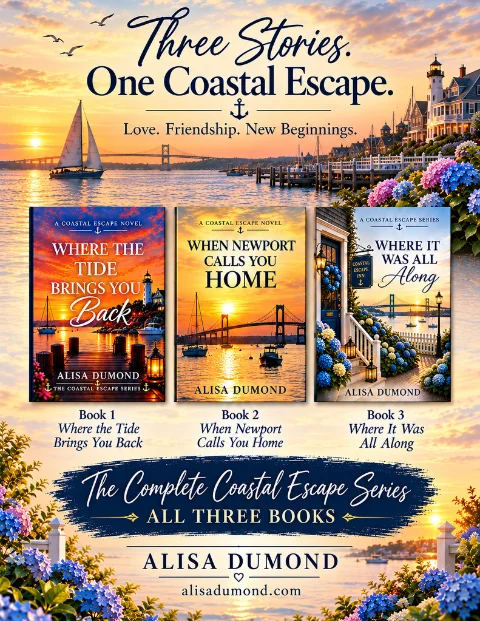
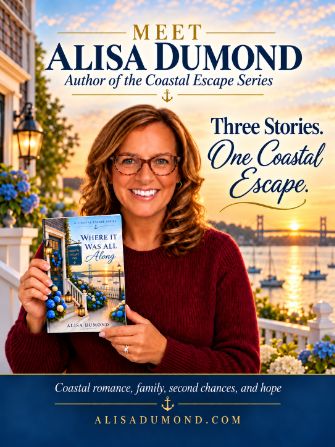
Newport, Rhode Island is more than the setting of my Coastal Escape Series—it is part of the heart of the stories. Its harbor, historic streets, ocean views, and sense of home create the perfect backdrop for romances about second chances, returning home, and finding what matters most. Through each book, I hope readers feel as though they have escaped to the Rhode Island coast for a little while.
Using those around me for characters seemed and easy way to write the story. But there was a character missing who would make the story compelling.
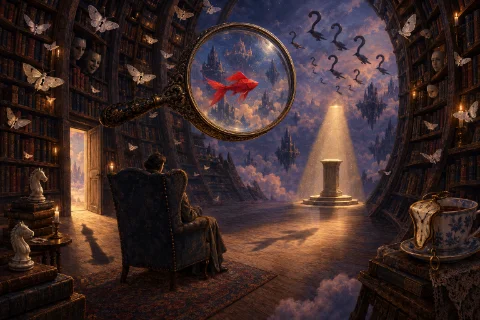
Most red herrings fail for the same reason. The reader can see you planting them. The best misdirection in psychological suspense is not a false clue at all. It is an assumption the reader brought with them. Here is how to find those assumptions and turn them into your most powerful tool.
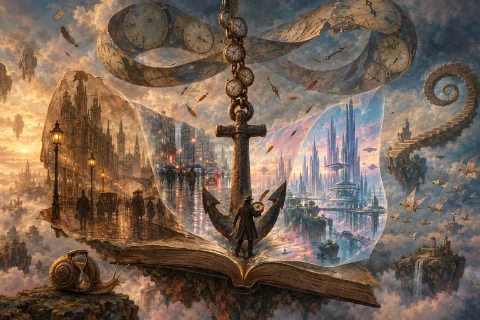
Nonlinear stories promise readers a puzzle. Too often they deliver a headache instead. The difference is not how many timelines you juggle. It is whether the reader always knows where to stand. Meet the chronological anchor, the pacing tool that keeps multi-era and time-loop novels from drifting.
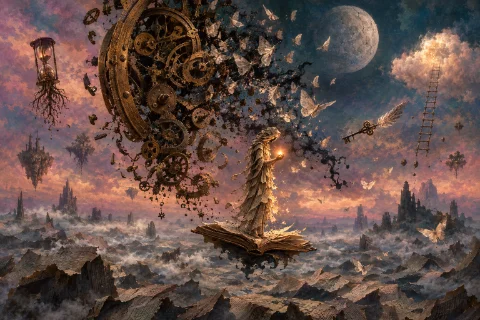
Your magic system has rules, costs, and a tidy chart in your notes. So why does it feel lifeless on the page? The problem is rarely the logic. It is that the rules were never asked to mean anything. Here is how to pivot from hard magic mechanics to magic that carries real thematic consequence.
The grandfather clock in the hallway did not tick, it exhaled, releasing small sighs of dust into the empty foyer with every passing minute. Clara sat on the bottom step of the staircase, her fingers tracing the jagged grain of the mahogany banister where her brother had carved his initials before vanishing. In her lap, the untouched velvet notebook felt less like a collection of blank pages and more like a heavy stone waiting to drag her under.
Through a series of essays by influential people, the book makes the case for Wider Ownership, whether that be of homes, shares or community assets. The aim is to give millions of people a real stake in the future of the UK.