Double-Voiced Discourse: Layering Irony Inside a Narrator's Own Sentences
Sometimes a sentence speaks with two voices at once. One voice says the thing. The other quietly questions it.
Author-written articles on reading habits, book culture, writing life, and indie publishing. Fresh perspectives from the community, every week.
Sometimes a sentence speaks with two voices at once. One voice says the thing. The other quietly questions it.
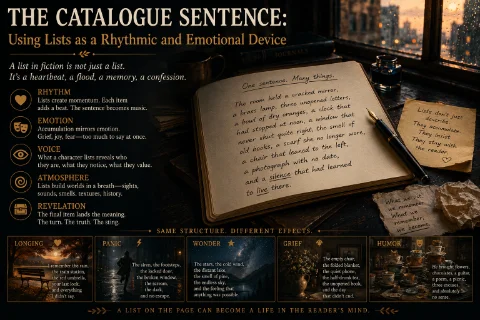
A list in fiction is not always a list. Sometimes it is a heartbeat, a memory, a confession, a flood, or the sound of a character trying to hold everything at once.
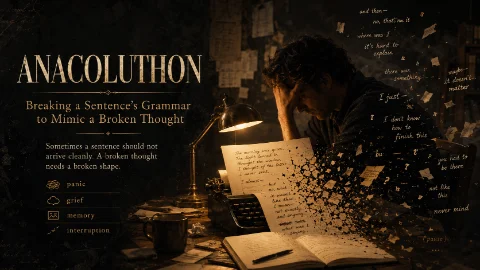
Sometimes a sentence should not arrive cleanly. A broken thought needs a broken shape.
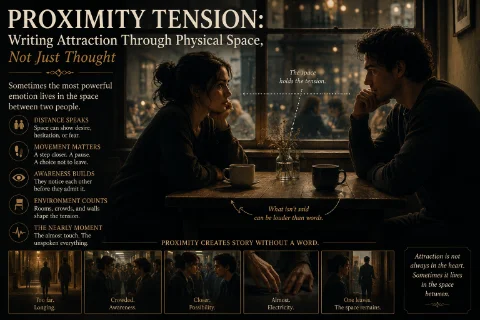
Sometimes attraction is not in what characters think. It lives in where they stand, how close they move, and the space neither of them crosses.
Some narrators don't read like writing at all. They read like someone talking. Here's how that effect is built.
Unlike the visual arts, as the written words cannot be appraised on espial, writers have always been handicapped in the arena of recognition, and if anything, in the world of printed words, the publisher-media nexus dealt them a double whammy, more so in the recent past. With this vexatious commercial nexus pitchforking their favoured folks, aided by the literary editors, as published authors into the public limelight, the genuine writers got relegated into the scornful arena of self-publishing
Not every story needs a villain, a battle, or an argument. Some stories move forward through contrast, discovery, and revelation instead of conflict.
Writing a book is like planting a seed. And if it gets published, it’s like the sprouting of a plant. If not, it’s a lonely furrow in a no-man’s land. Like the gardener tends the plant into a tree, it’s the readers who help the book grow in stature. Blessed are the authors who would be able to live long enough to smell that their readers savored the fruits of their creativity.
Those who treat writing as a vehicle of visibility would be incapable of experiencing the joy of the journey. In the end though, were they to come into spotlight, they might well gloat in the limelight though without experiencing the real thrill of letters. Even in case such won’ make it to the post; their pain cannot be intense for they wouldn’t have felt the joy of writing either.
Sometimes the narrator does not stay outside the story. Sometimes the voice reaches in, touches the world, and reminds readers that fiction has walls.
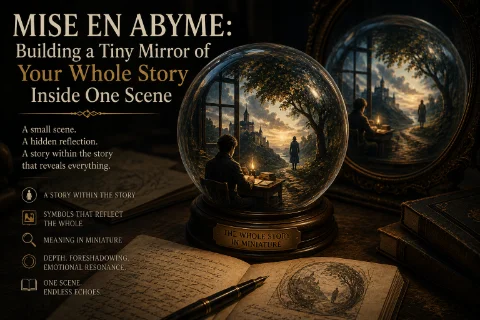
Sometimes one small scene contains the whole story in miniature. A broken toy, a painting, a dream, or a tale within the tale can quietly reveal everything.
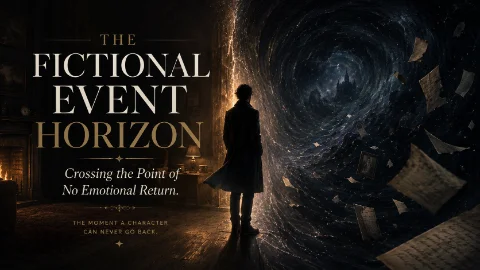
Every powerful story has a moment when the character can still turn back. Then something happens, and emotionally, they never can again.
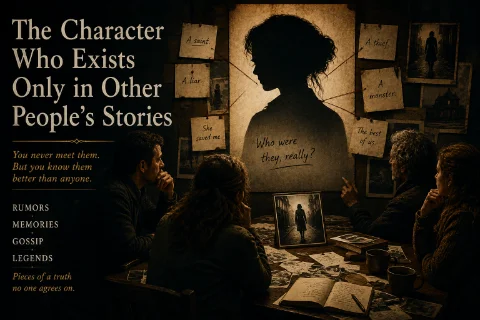
Some characters never enter the room. They arrive through rumor, memory, blame, love, fear, and the stories other people tell about them.
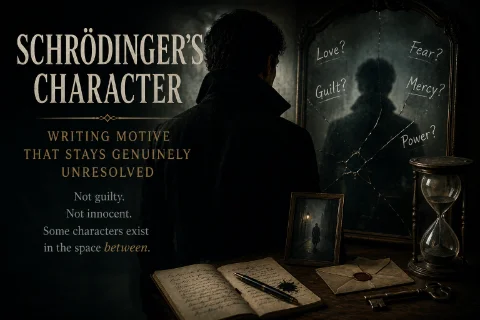
A character acts, but the motive remains locked. Was it love, guilt, selfishness, fear, or mercy? Unresolved motive keeps a character alive after the final page because the reader is left holding more than one truth at once.
A knight beneath fluorescent lights. A queen speaking in modern slogans. A clock appearing centuries too early. Anachronism is often treated as a mistake, but in skilled hands it becomes a storytelling device. The wrong detail in the wrong time can reveal deeper truths, connecting past and present in ways strict accuracy never could.
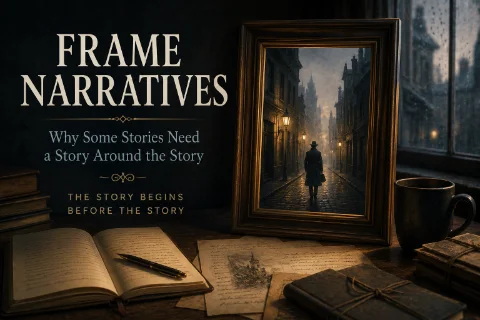
A frame narrative is a story with a doorway before the story begins. Someone remembers, confesses, discovers a letter, or passes on a tale. That outer layer changes everything. It makes the main story feel older, stranger, and more meaningful because the reader is not only asking what happened, but why it is being told now.
But what a poetic justice it was that the publishers’ apathy, for my literary foray into an uncharted fictional arena, pushed me into Roopa’s despondent shoes, leg for leg! So to say, to atone for myself, and to earn for her the empathy, at least, of a few discerning readers, I self-published it, and it's gratifying to me that it has earned some literary acclaim in the digital world of ebooks.
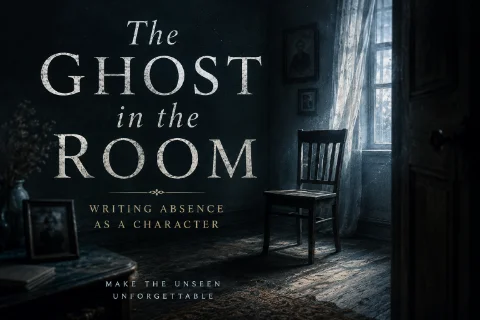
No one mentioned her anymore. Yet every chair in the house seemed to know exactly where she used to sit. Some absences leave. Others stay and learn how to haunt the living.