Indie Books. Real Authors. Real Readers.

Discover books, follow authors, and join a community that reads.

Articles Tagged fiction writing

Everything tagged fiction writing — articles written by indie authors and readers on topics that matter to the community.

Created with Avocode

Beyond the Trope: Subverting Cozy Fantasy and Dark Academia

Cozy fantasy and dark academia succeed because readers recognize their emotional promises, from comfort and found family to intellectual obsession and beautiful darkness. Subverting these genres does not require rejecting familiar tropes, but questioning one assumption, reversing an expectation, or giving a beloved element a surprising cost. The strongest subversions preserve what readers came for while making the world behind the trope less predictable.

T
Tripen
1 week ago
10 min read
19

Rules for Voicey Writing: How to Make Your Prose Sound Like You

Original ideas are rare, but original execution can make familiar material feel completely new. A distinctive writing voice develops through repeated choices in rhythm, detail, humor, perspective, imagery, and emotional focus. By studying your own writing patterns and practicing deliberately, you can discover which habits deserve to become part of your signature style.

T
Tripen
2 weeks ago
10 min read
22

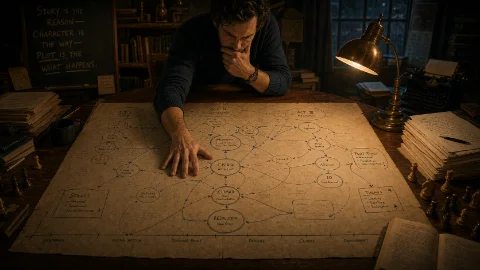
Character-Driven vs. Plot-Driven Stories: What Really Moves the Reader Forward?

Plot-driven stories create momentum through external events, while character-driven stories grow primarily from desires, flaws, relationships, and decisions. Neither approach is inherently stronger, and many compelling novels allow plot and character to continually reshape each other. Understanding which engine drives your story can help you improve conflict, pacing, character arcs, and emotional impact.

T
Tripen
2 weeks ago
11 min read
16

Immersive Fiction: How to Make Readers Feel Like They Are Inside the Story

Immersive fiction makes readers feel present inside a story rather than simply observing it from a distance. Strong immersion comes from selective sensory detail, close character perception, physical interaction, emotional stakes, and carefully controlled narrative distance. The goal is not to describe everything, but to make the right details feel impossible to ignore.

How to Write a Mystery Novel That Keeps Readers Guessing

Crafting a gripping whodunit is one of the most rewarding challenges a novelist can face. It requires you to stay two steps ahead of your audience while playing completely fair with the evidence. If your plot structure is too loose, readers will figure out the killer by chapter three. This guide breaks down the structural mechanics needed to build an air-tight investigative puzzle.

The Pitfall of Passive Characters: How to Write Casts with Real Depth

Writers often spend months building intricate plots only to populate them with flat and passive characters who merely react to the world around them. When a protagonist lacks agency and internal drive, the narrative loses its emotional resonance and fails to challenge mainstream tropes. By learning to identify and fix these character flaws, you can craft stories that leave a lasting impact on your audience.

The Storyteller’s Contract: Why POV Is a Promise to Your Reader

Choosing a point of view for your story is often treated as a simple prerequisite, similar to picking a font or setting page margins. However, POV is actually the lens through which your audience experiences every single emotion, action, and plot development. By establishing and maintaining a consistent perspective, you honor an unwritten agreement that keeps readers fully immersed in your narrative world.