
I broke myself in 2019. Not dramatically, no collapse at a keyboard, no tearful meltdown in a bookshop. Just a slow, creeping exhaustion that turned every blank page into an accusation. I’d force myself to write three hundred words, hate all of them, and spend the next hour scrolling social media to escape the shame. I called it writer’s block. I tried all the usual cures: prompts, routines, stern self-talk. Nothing worked. Eventually, I stopped writing altogether. I thought my creative life was over.
What I didn’t understand then, what no one had ever taught me, is that creativity isn’t a machine. It’s a living thing, and living things have seasons. There are times for growth, times for blooming, and yes, times for lying fallow beneath the soil, gathering nutrients for what comes next. The problem wasn’t that I was broken. The problem was that I’d been trying to harvest from a field that desperately needed to rest.
Finding your creative rhythm isn’t about forcing yourself into a permanent state of productivity. It’s about learning to recognise the season you’re in and honouring what it needs. It’s about embracing natural seasons of rest and production as essential partners rather than enemies. This is the philosophy that brought me back to writing and made me a happier, healthier storyteller.
The Myth of Endless Summer
Modern creative culture, especially online, worships output. Word count brags, daily writing streaks, five-book-a-year publishing schedules. The message is clear: more is better, consistency is everything, and rest is a sign of weakness. We celebrate creators who seem to exist in an endless summer of productivity, never acknowledging that no ecosystem works that way.
I absorbed this message completely. If I wasn’t writing every day, I felt guilty. If a month passed without a new chapter, I panicked. I stopped reading for pleasure because “that’s not writing.” I stopped walking in the woods because “that’s not productive.” I stripped my life of the very things that fed my imagination, all in service of an output that was slowly strangling itself.
The truth is, even nature’s most abundant landscapes have winter. The orchard that feeds a village spends months looking dead. The bear that fills the forest with life spends winter in a cave. Rest isn’t a failure of the system, it’s a core function of it. Finding your creative rhythm means rejecting the myth of endless summer and giving yourself permission to be a whole, seasonal creature.
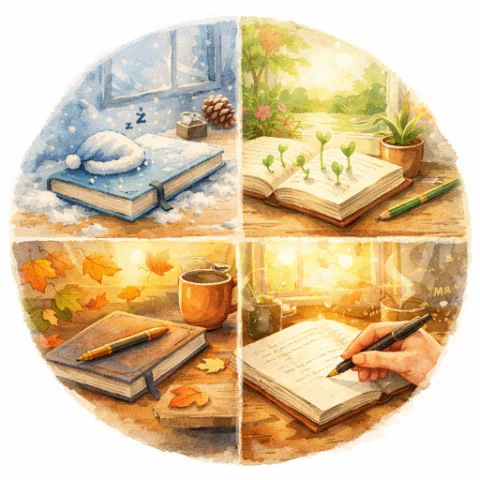
The Four Seasons of the Creative Cycle
Over years of paying attention and sometimes paying a therapist, I’ve come to recognize a pattern in my own creative life. It’s not perfectly aligned with the calendar, and yours might look different. But the framework of four seasons has helped me understand and work with my energy, rather than against it.
Winter: The Season of Fallow Rest
What it feels like: Empty. Quiet. Ideas feel distant, and the thought of opening a manuscript is exhausting. You might feel guilty, worried, or convinced you’ll never write again.
What’s actually happening: Deep processing. Winter is the subconscious working on problems you can’t solve consciously. It’s the composting of old ideas, the grieving of abandoned projects, the gentle recharge of mental batteries. Winter isn’t sterile, it’s rich and dark and full of invisible life.
What to do: Rest without guilt. Read widely and for pure pleasure. Watch films, visit galleries, and take long walks without headphones. Collect tiny sparks in a notebook without demanding they become anything. Trust that this season is part of your creative rhythm, not a departure from it.
Spring: The Season of Curious Stirring
What it feels like: A flicker. An itch. You might find yourself thinking about a character again, or scribbling a fragment on a café napkin. Ideas are fragile but persistent, like shoots through frost.
What’s actually happening: The creative self is waking up, testing the ground, and gathering new energy. Old projects may resurface with fresh eyes. New ones may whisper.
What to do: Follow curiosity without pressure. Try a new notebook. Write a terrible poem. Brainstorm without commitment. Visit a place that feels creatively alive. Spring is the season of play, not production. Protect your tender shoots from the harsh light of criticism, especially your own.
Summer: The Season of Abundant Production
What it feels like: Glorious. Words pour out, scenes arrive fully formed, characters surprise you. You’re excited to sit down and write, and the work feels almost effortless. This is the season everyone wants to bottle.
What’s actually happening: All the rest and gathering of winter and spring has built momentum. The conscious and subconscious are aligned. Output peaks, but it’s fuelled by what came before.
What to do: Ride the wave. Write as much as you can, but remember that summer doesn’t last forever. Build gentle structures, regular hours, and a dedicated space that support the flow without strangling it. And crucially, don’t berate yourself when the energy eventually shifts. Natural seasons of rest and production turn by design, not by failure.
Autumn: The Season of Harvest and Release
What it feels like: A slowing. Words come, but more deliberately. You’re editing more than drafting, refining what summer produced. A bittersweet awareness that this cycle is ending.
What’s actually happening: The creative body is finishing what it started, tying up loose ends, and preparing to let go. It’s a season of discernment, keeping what works, releasing what doesn’t, and of gratitude for the work that was possible.
What to do: Edit with care. Finish projects. Send things out into the world or quietly close them with thanks. Prepare for winter by noting what you’ve learned and what you might need when the quiet comes. Autumn is the season of transition, and it deserves its own rituals.
How I Learned to Dance with the Seasons (Not Fight Them)
The shift for me came when I stopped asking, “What’s wrong with me?” and started asking, “What season am I in right now?” That question changed everything. In winter, I gave myself permission to read a novel a week and call it “research.” In spring, I followed tangents without demanding they become drafts. In summer, I wrote a novella in six weeks and loved every minute. In autumn, I edited that novella and let a different manuscript rest forever, with genuine peace.
Finding your creative rhythm isn’t about controlling the seasons it’s about listening to them. Some practical things that help me now:
Track your energy, not just your word count. I keep a simple journal where I note how I feel about writing each day: exhausted, neutral, eager, alive. Over months, patterns emerged. I saw my summers and winters clearly for the first time.
Build seasonal rituals. Winter: candlelight and poetry. Spring: new stationery and permission slips for bad first drafts. Summer: dedicated writing retreats, even if it’s just a Saturday at the library. Autumn: slow editing sessions with a favourite tea. These rituals anchor each season.
Respect your own calendar. My writing winters often arrive in late summer, while my creative springs tend to stir in October. There’s no moral value in aligning with the calendar year. Your seasons are yours.
Communicate with the people who depend on your work. If you’re an indie author with readers waiting, it’s okay to say, “I’m in a fallow season. New work is coming, just not yet.” The right readers respect the rhythm.
The Indie Reading Community: A Place That Respects the Seasons
One of the reasons I love our Indie Reading Community is that we’re not just about books we’re about the humans who make them. We talk openly about creative seasons, about burnout and recovery, about the quiet winters that precede the stories everyone eventually reads. We’ve built a culture that doesn’t shame rest. We celebrate it.
When a member posts, “I’m stepping back for a few months to recharge,” the response isn’t panic or disappointment. It’s warmth, understanding, and “we’ll be here when you return.” That’s rare, and it’s precious. It’s the soil in which sustainable creative lives grow.
If you’ve ever felt alone in your creative winter, there’s a seat for you here. You don’t have to produce to belong. You just have to love stories, in whatever season you’re in.
Your Creativity Is Not a Factory
The world will try to convince you that your worth as a writer is measured in output books published, words logged, content posted. That’s a lie. Your creativity is not a factory. It’s a garden, a forest, a living landscape with its own weather and its own wisdom. Finding your creative rhythm means learning to read the sky of your own mind and trust what it tells you.
So if you’re in winter right now, let yourself rest. The compost of this season will feed your next summer. If you’re in spring, follow the small, strange stirrings without judgment. If summer has you in its glorious grip, ride it with joy and know that autumn’s gentle close is not a failure. And if you’re in autumn, harvest with gratitude. You made something, and that matters.
Now I’m curious: What season are you in right now, creatively speaking? Have you learned to recognise your own patterns, or are you still pushing through winter in summer clothes? Share your experience in the comments. Let’s be the community that normalises rest as deeply as we celebrate production.


