The Character Who Exists Only in Other People's Stories
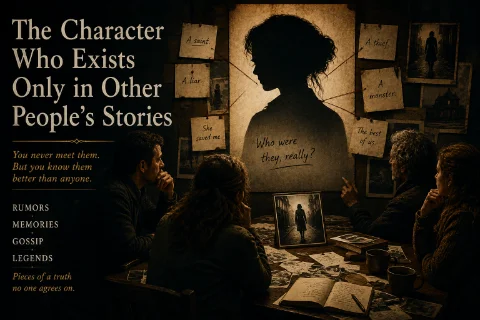
Some characters never enter the room. They arrive through rumor, memory, blame, love, fear, and the stories other people tell about them.
Everything tagged writing tips — articles written by indie authors and readers on topics that matter to the community.
Some characters never enter the room. They arrive through rumor, memory, blame, love, fear, and the stories other people tell about them.
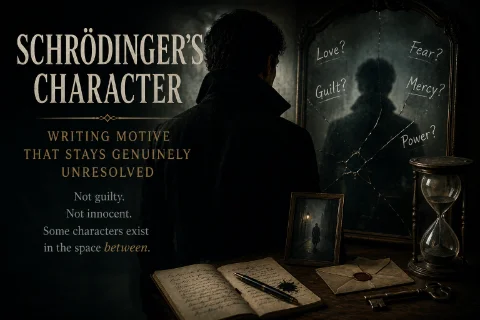
A character acts, but the motive remains locked. Was it love, guilt, selfishness, fear, or mercy? Unresolved motive keeps a character alive after the final page because the reader is left holding more than one truth at once.
A knight beneath fluorescent lights. A queen speaking in modern slogans. A clock appearing centuries too early. Anachronism is often treated as a mistake, but in skilled hands it becomes a storytelling device. The wrong detail in the wrong time can reveal deeper truths, connecting past and present in ways strict accuracy never could.
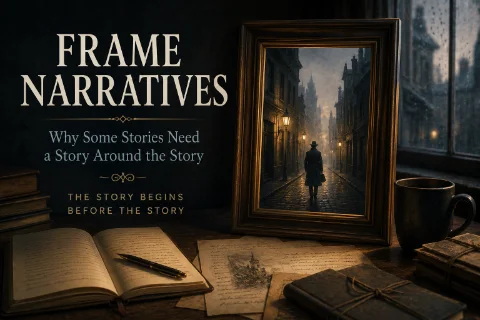
A frame narrative is a story with a doorway before the story begins. Someone remembers, confesses, discovers a letter, or passes on a tale. That outer layer changes everything. It makes the main story feel older, stranger, and more meaningful because the reader is not only asking what happened, but why it is being told now.
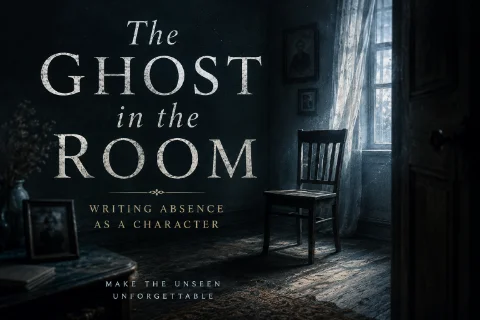
No one mentioned her anymore. Yet every chair in the house seemed to know exactly where she used to sit. Some absences leave. Others stay and learn how to haunt the living.
Learn delayed decoding, the technique behind Joseph Conrad's most disorientating scenes, and how to use it to put readers inside a character's confusion without ever losing them.
Every story that falls apart does so for the same reason: one of its links is broken. Character without desire goes nowhere. Stakes without obstacles feel hollow. Climax without setup lands flat. Here is how to build the chain that holds your novel together.
Some stories feel like they were always meant to end exactly the way they did. That sense of inevitability is rarely an accident. It is often the quiet work of chiastic structure, a mirror pattern woven into the story's bones that most readers feel without ever knowing its name.
Every novel takes place inside a society, even when that society is just the real world. The skills behind a believable fictional culture belong to every genre, not only fantasy.
Long before books existed, stories were how people connected. Stories taught lessons, preserved history, and inspired change. Storytelling is woven into who we are as human beings.
Every character in your story is living through a completely different novel. Multi-perspective storytelling is the art of letting several of those novels exist at once, without any of them canceling each other out.
Writer's block is not a creativity problem. It is almost always a fear problem, a structure problem, or a burnout problem. Once you know which one you are dealing with, fixing it becomes a lot more straightforward than staring at a blank page hoping for inspiration.