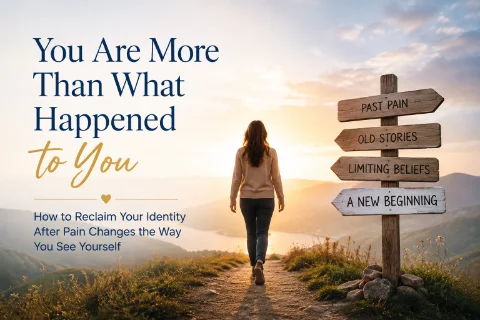
You Are More Than What Happened to You
How to Reclaim Your Identity After Pain Changes the Way You See Yourself
Pain rarely stays neatly contained in the past. A difficult relationship, betrayal, rejection, failure, loss, humiliation, or major disappointment might end, yet its influence often continues long after the event itself. It affects how you interpret situations, whom you trust, what you expect from relationships, how confidently you make decisions, and what you believe about yourself. Over time, something deeper sometimes happens. The experience stops feeling like something you went through and starts becoming part of the way you define yourself. Instead of thinking, “I experienced rejection,” you begin thinking, “I am someone people reject.” Instead of remembering a failure as one difficult chapter, you begin seeing yourself as someone who fails. When this happens, the past starts influencing decisions that have little to do with the original experience.
Every person carries an internal story about who they are. This story develops through family experiences, relationships, education, work, successes, mistakes, praise, criticism, acceptance, rejection, and thousands of smaller moments. Some experiences strengthen your sense of self. Others create beliefs designed to protect you from experiencing the same pain again. Someone who has experienced betrayal, for example, might gradually decide that trusting people creates unnecessary risk. Years later, the person might describe themselves as independent, private, cautious, or emotionally strong without recognizing how much of this identity developed from an earlier experience. What now feels like personality might once have started as protection. Recognizing this difference matters because once you understand where a pattern came from, you have an opportunity to decide whether you still want it to influence your life.
Protection has a purpose. After rejection, avoiding situations where rejection might happen again feels sensible. After betrayal, becoming cautious about trust feels reasonable. After losing control, trying to control future situations creates a sense of security. These responses often help us through difficult periods, but problems develop when temporary protection becomes a permanent way of living. You avoid vulnerability because vulnerability once hurt. You turn away from opportunities because failure once embarrassed you. You distance yourself from people because someone once betrayed your trust. You expect disappointment because hoping for something better feels risky. Eventually, the protection designed to prevent pain also starts restricting relationships, opportunities, confidence, and personal growth.
This is why repeating patterns deserve attention. When similar problems keep appearing across different relationships, workplaces, friendships, or stages of life, the circumstances might not be the only issue. The people change and the situations change, yet an underlying belief travels with you. Someone who believes they are unworthy of respect might repeatedly accept behaviour they dislike. Someone who expects abandonment might hold too tightly to relationships or withdraw before another person gets close. Someone who learned to associate mistakes with humiliation might avoid opportunities where success is uncertain. Looking at these patterns without judging yourself helps you identify the beliefs underneath them.
One useful question is surprisingly simple: Which parts of the person I am today represent who I want to be, and which parts developed because I was trying to protect myself? The answer is rarely straightforward. Your independence might reflect genuine strength while also containing a reluctance to ask for help. Your caution might reflect wisdom while also preventing you from taking worthwhile risks. Your ability to cope alone might represent resilience while also making emotional openness difficult. Reclaiming your identity does not require rejecting everything you learned from painful experiences. It means separating the lessons worth keeping from the restrictions you no longer need.
Reclaiming yourself also does not mean pretending painful events never happened. It does not require rewriting history, denying disappointment, or forcing yourself to feel positive about experiences that caused genuine harm. It means changing the authority those experiences hold over your present identity. There is an important difference between saying, “This happened to me,” and believing, “This defines me.” The first acknowledges reality. The second gives an experience from the past continuing influence over how you understand yourself today. You cannot change the event itself, but you are still able to examine the conclusions you formed because of it.
Perhaps rejection taught you that you were not good enough. Perhaps betrayal taught you that nobody deserved trust. Perhaps failure convinced you that taking risks was dangerous. Perhaps years of criticism trained you to seek approval before trusting your own judgment. These conclusions might have made sense when they formed, particularly when emotions were intense and your main priority was protecting yourself. Yet a conclusion formed during one period of your life does not need to become a permanent rule for every period that follows. The experience was real. The meaning you continue to give it remains open to examination.
This is also why changing behaviour alone often produces disappointing results. Advice such as “be more confident,” “stop overthinking,” “trust people,” “set stronger boundaries,” or “take more risks” sounds useful, yet behaviour becomes difficult to sustain when the identity underneath it remains unchanged. If part of you still believes, “I always fail,” trying to behave confidently creates internal conflict. If you believe, “People eventually hurt me,” trusting someone feels dangerous. If you believe your needs matter less than everyone else's, setting boundaries feels selfish rather than healthy. Lasting change therefore often starts beneath the behaviour, with the beliefs and personal narratives supporting it.
Try asking yourself, “What did this experience teach me to believe about myself?” Then follow it with another question: “Is this belief a fact, or is it a conclusion I formed during a painful period of my life?” Those two questions create valuable distance between what happened and what you believe it means about you. You might find that beliefs you have carried for years were never consciously chosen. They developed gradually and then became familiar enough to feel true. Examining them gives you an opportunity to decide whether they still deserve a place in your life.
Forgiveness also becomes important in this process, although forgiveness is often misunderstood. Forgiving someone does not require approving what they did, forgetting what happened, restoring the relationship, or allowing the person back into your life. You might forgive while maintaining strong boundaries. You might forgive and still decide that a relationship should remain finished. You might forgive while fully acknowledging the harm someone caused. Viewed this way, forgiveness becomes less about changing your judgment of another person's behaviour and more about deciding how much influence the experience should continue to hold over your future.
Rebuilding your identity then requires evidence. Positive statements have limited value when your daily choices continue reinforcing an older story. If you want to become someone who trusts their judgment, begin making small decisions without constantly seeking reassurance. If you want to become someone who maintains healthy boundaries, practise saying no when something conflicts with your priorities or values. If you want to become someone willing to trust again, begin with small acts of openness rather than demanding complete vulnerability from yourself. If you want to stop defining yourself through failure, begin treating mistakes as information you use to make your next decision better.
Each of these choices provides evidence for a different understanding of yourself. Identity rarely changes because of one dramatic moment. It changes through repeated experiences. You make one different decision, then another. You establish one boundary and maintain it. You take one opportunity despite uncertainty. You trust your judgment and learn from the result. Gradually, the person you believe yourself to be begins reflecting what you are doing now rather than only what happened before.
There is another question worth considering after a painful experience. People understandably spend considerable time asking, “Why did this happen to me?” Sometimes understanding the reason helps. Sometimes there is no satisfying answer. For moving forward, a different question often creates more possibilities: “Who do I choose to become from here?” This does not minimize what happened. It redirects attention toward the part of your life where your decisions still matter. You decide which beliefs you carry forward, which patterns deserve to end, what boundaries you establish, what relationships you build, what opportunities you pursue, and how much space old experiences occupy in new chapters of your life.
Reclaiming yourself does not necessarily mean returning to the person you were before you were hurt. Difficult experiences change us, and some of the lessons they leave behind are worth keeping. The aim is to separate useful wisdom from unnecessary emotional restrictions. You keep greater awareness without carrying constant suspicion. You keep stronger boundaries without shutting everyone out. You keep lessons from failure without turning failure into your identity. You keep what experience taught you while giving yourself permission to question what fear taught you.
These ideas became the foundation for my book, You, Reclaimed: Reclaim Your Identity After What Hurt You. I wanted to explore what happens when healing moves beyond simply coping with the past and begins addressing the identity we formed around it. The book examines hidden personal narratives, repeating patterns, emotional protection, forgiveness, boundaries, self-belief, and the gradual process of rebuilding an identity based more on conscious choice than old pain.
What happened to you deserves a place in your story. It influenced you, taught you things, changed some of your assumptions, and perhaps left marks you still recognize today. But being influenced by your past is different from being permanently defined by it. You still have decisions ahead of you, relationships yet to be formed, opportunities you have not encountered, and parts of yourself you have not finished developing.
Your past explains part of who you became.
It does not have to decide who you become next.
Book Link: https://chiify.com/books/you-reclaimed