Introduction: The Scene Nobody Worries About
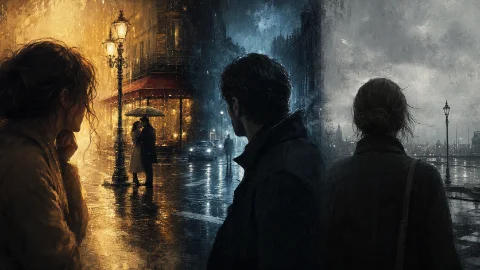
A woman buys groceries.
A detective fills out paperwork.
Two brothers discuss weather at breakfast.
A student waits for a bus.
Nothing explodes.
Nobody confesses.
No villain appears.
No mystery is solved.
Readers move through the scene comfortably. Their guard lowers. Their attention shifts elsewhere.
And hidden inside that ordinary chapter is the key to the entire novel.
A sentence.
A gesture.
A name.
A contradiction.
A detail so important that everything depends on it.
Yet readers barely notice.
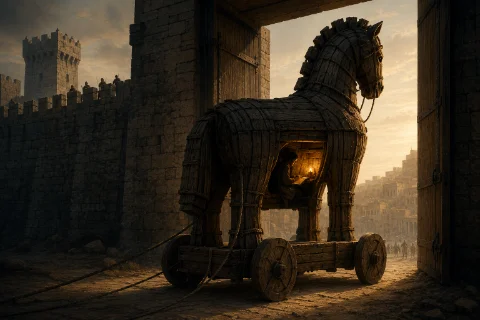
This is the Trojan Horse Chapter.
A chapter that disguises crucial information inside a scene that appears unimportant.
The reader willingly lets it inside.
Only later do they discover what was hidden there.
What Is a Trojan Horse Chapter?
A Trojan Horse Chapter is a seemingly minor scene that secretly carries information essential to the story.
The chapter appears harmless.
Perhaps even boring.
It may focus on routine.
Daily life.
Small talk.
Travel.
Domestic activity.
Administrative tasks.
Background information.
Readers assume the chapter exists for pacing, atmosphere, character development, or transition.
Meanwhile, the writer quietly hides something vital inside it.
A clue.
A motive.
A secret.
A future twist.
A character flaw.
A revelation that will matter hundreds of pages later.
The chapter disguises significance behind normality.
Why Readers Miss Important Information
Readers are excellent at noticing obvious clues.
A mysterious envelope.
A hidden weapon.
A suspicious stranger.
A dramatic confession.
These details arrive wearing bright clothes.
Readers immediately pay attention.
But human attention has limits.
We naturally focus on what appears important.
When a scene looks ordinary, readers relax.
Their analytical defenses lower.
They absorb information without examining it closely.
Writers can use this tendency.
The most effective clues are often hidden where readers are least likely to search.
The Problem With Obvious Foreshadowing
Many writers struggle with foreshadowing.
If the clue is too visible, readers predict the twist.
If the clue is too hidden, readers feel cheated.
The Trojan Horse Chapter solves this problem.
The clue remains visible.
Readers encounter it directly.
But it appears inside a scene that seems unrelated to the future revelation.
The information is present.
The attention is elsewhere.
When the twist arrives, readers remember the clue and feel satisfaction rather than surprise alone.
The story feels fair.
The writer hid the truth in plain sight.
The Grocery Store Principle
Imagine a thriller.
The protagonist visits a grocery store.
Most readers assume the scene exists to show daily life between major plot developments.
During checkout, the cashier casually mentions that the local bridge was closed three weeks earlier.
The conversation lasts one sentence.
Readers move on.
Two hundred pages later, a suspect claims to have crossed that bridge on the exact day it was supposedly closed.
Suddenly the grocery store scene becomes important.
The chapter was never about groceries.
It was about the bridge.
But because the information arrived wrapped in routine activity, readers accepted it without suspicion.
That is the Trojan Horse effect.
Hiding Information Inside Character Moments
One of the best places to hide important information is inside character development.
Readers enjoy learning about characters.
They pay attention to personality, relationships, habits, fears, and memories.
This makes character scenes excellent hiding places.
For example:
A daughter remembers that her father always wore gloves, even in summer.
At first, this appears to be characterization.
Later, readers discover the gloves concealed identifying scars linked to an unsolved crime.
The memory felt emotional.
But it was also evidence.
The writer delivered plot information disguised as character information.
The Power of Administrative Scenes
Many writers dislike administrative scenes.
Meetings.
Reports.
Travel arrangements.
Paperwork.
Schedules.
Legal discussions.
Inventory lists.
Yet these scenes can become extraordinary Trojan Horses.
Readers expect them to be functional.
This expectation creates cover.
A detective reviewing financial records may discover a tiny inconsistency.
A captain planning a voyage may mention a route that becomes crucial later.
A lawyer may casually reference a date that destroys an alibi.
Because the scene appears procedural, readers rarely focus on the hidden detail.
The information slips inside unnoticed.
Boring on Purpose
Most writers try to make every scene memorable.
The Trojan Horse Chapter sometimes benefits from doing the opposite.
Not bad writing.
Not genuine boredom.
Strategic normality.
The scene should feel natural and unremarkable compared to surrounding dramatic moments.
Readers need somewhere to rest.
The writer uses that rest to smuggle information into the story.
Think of it like stage magic.
The audience watches the bright hand.
The important movement happens elsewhere.
Emotional Camouflage
Strong emotions create excellent camouflage.
Readers focus on emotional meaning rather than factual meaning.
Imagine a funeral scene.
Readers pay attention to grief.
Relationships.
Regret.
Memory.
While everyone focuses on emotion, the writer quietly places a crucial clue inside a conversation.
The clue survives because emotion distracted attention.
The information enters disguised as atmosphere.
The Hidden Sentence
Sometimes an entire Trojan Horse Chapter exists to deliver a single sentence.
One line.
One observation.
One apparently insignificant detail.
For example:
"The old house had only one key."
Readers may forget the sentence immediately.
Three hundred pages later, someone enters the locked house.
Now the forgotten sentence becomes explosive.
The chapter's true purpose is revealed.
A single sentence was carrying enormous weight.
Creating Delayed Importance
A Trojan Horse Chapter depends on delayed importance.
The information matters later.
Sometimes much later.
The gap is important.
If the payoff arrives immediately, readers connect the dots too easily.
Distance creates concealment.
The longer the delay, the more effectively the information blends into memory.
When the revelation finally arrives, readers experience recognition.
Recognition is one of the most satisfying emotions in storytelling.
It feels like discovery.
The Difference Between Hidden and Invisible
A Trojan Horse Chapter should never make information invisible.
Readers must encounter it.
The clue must exist on the page.
The detail must be available.
The scene should hide significance, not hide information.
The reader should be able to return and say:
"It was there all along."
That is the goal.
Not deception.
Fair concealment.
Worldbuilding as a Smuggling Operation
Fantasy and science fiction writers have a powerful advantage.
Worldbuilding naturally contains large amounts of information.
Readers expect descriptions of customs, geography, technology, religion, and history.
This creates ideal camouflage.
A throwaway detail about local traditions may later reveal a villain's identity.
A casual explanation of magic may quietly establish the solution to the final conflict.
A historical anecdote may become the key to understanding the present.
Worldbuilding often functions as one giant Trojan Horse.
Readers think they are learning the setting.
Sometimes they are learning the ending.
The Domestic Scene Trick
Domestic scenes are especially effective.
Cooking.
Cleaning.
Laundry.
Gardening.
Repair work.
Family dinners.
Household routines.
These scenes feel safe.
Readers associate them with character texture rather than plot movement.
Writers can use this expectation.
A murder weapon appears in a kitchen drawer.
A family photograph reveals a hidden relationship.
A casual dinner argument exposes a motive.
A gardening conversation establishes a poison.
The domestic setting lowers suspicion.
The clue slips through unnoticed.
The Trojan Horse Character
Sometimes the entire scene exists to establish a seemingly minor character.
A shopkeeper.
A neighbor.
A receptionist.
A driver.
A teacher.
Readers assume the character exists for realism.
Later they become essential.
The scene was never about atmosphere.
It was about planting a person who would matter later.
The chapter quietly introduced a future story engine.
How to Build a Trojan Horse Chapter
1. Decide What Must Be Hidden
Choose the crucial information.
The clue.
The motive.
The contradiction.
The future revelation.
2. Build a Strong Surface Purpose
The chapter should appear to serve another function.
Character development.
Atmosphere.
Travel.
Worldbuilding.
Relationship building.
3. Make the Hidden Detail Visible
Do not bury it completely.
Readers must encounter it.
4. Avoid Highlighting It
Do not emphasize the clue with dramatic language.
Treat it naturally.
5. Delay the Payoff
Allow time to pass before revealing significance.
6. Reward Memory
When the truth emerges, readers should be able to connect the dots.
7. Respect Fairness
Never withhold information the story promised to provide.
Hide significance, not facts.
Example: Obvious vs Trojan Horse
Obvious version:
"The silver key would become extremely important later."
Readers immediately notice.
The mystery weakens.
Trojan Horse version:
"While cleaning the attic, Emma dropped a silver key into a box of Christmas decorations and forgot about it."
The key remains visible.
But attention shifts toward the activity.
The information survives unnoticed.
The future twist becomes stronger.
Why Readers Love This Technique
Readers love discovering that a seemingly ordinary scene mattered all along.
It creates a feeling of hidden architecture.
The novel feels designed.
The world feels interconnected.
The writer appears intelligent without showing off.
Most importantly, the revelation feels earned.
Readers do not feel tricked.
They feel rewarded.
The story trusted them enough to hide the answer in plain sight.
Common Mistakes
Making the Scene Truly Boring
The chapter should appear ordinary, not become tedious.
Hiding Too Much
Readers must actually see the information.
Highlighting the Clue
Overemphasis destroys camouflage.
Paying Off Too Quickly
The delay helps conceal significance.
Using Coincidences
The hidden detail should connect logically to later events.
The Secret Passenger
The Trojan Horse Chapter is one of fiction's most elegant tricks.
It disguises importance as routine.
It hides revelation inside familiarity.
It smuggles crucial information past the reader's defenses.
The chapter looks harmless.
The reader welcomes it.
The story moves on.
Only later does the hidden passenger emerge.
A forgotten sentence.
A casual observation.
A meaningless object.
A passing remark.
A chapter nobody worried about.
Sometimes the strongest scene in a novel is not the dramatic confrontation, the shocking revelation, or the explosive climax.
Sometimes it is the quiet chapter sitting unnoticed in the middle of the book, carrying the entire ending inside it from the very beginning.