Some stories feel like they were assembled to order. You can sense the beat sheet beneath the prose, the carefully arranged twists, the dialogue that sounds a little too tidy. Then there are stories that feel like you stumbled onto them mid-life. They read like something unearthed, not manufactured. That second kind is what I mean by “story as artifact.”
Thinking of story as artifact changes how you approach the page. Instead of building a structure from nothing, you act as if the story already exists somewhere, half buried. Your job is to brush away the dust without breaking what makes it unique.
From Architect To Archeologist
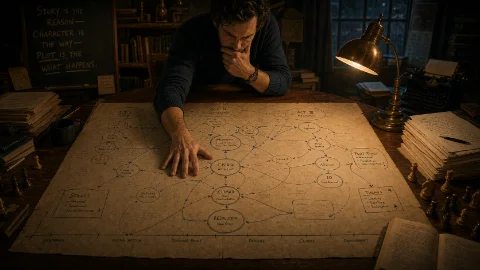
Most writing advice trains you to be an architect. You design outlines, arrange plot points and decide on turning points by specific word counts. That approach is not wrong. It is useful, especially when you are trying to finish books on a schedule.
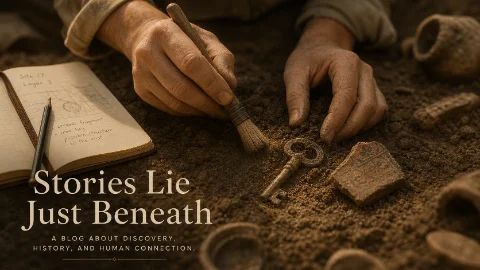
Story as artifact asks you to wear a different hat. Here, you become an archeologist. You assume that the world, the characters and the events already have a history. You arrive late. The question is not “What can I make happen?” but “What has already happened here, and how do I reveal it?”
That mental shift matters. When you focus on control, you are always steering. When you focus on discovery, you are always listening.
The Curiosity-First Mindset
When you write like an architect, your core questions sound like this:
- What happens next?
- How do I set up this twist?
- How can I reveal this backstory efficiently?
When you write like an archeologist, your core questions change:
- What existed here before page one?
- What does this character already want, even if I do not approve?
- What truth is this scene trying to show me?
Instead of forcing events to match your plan, you watch what emerges from the people and the place you are writing about. You let the story argue with you. You let characters do things that annoy your outline, then you follow the thread to see why.
Starting With Relics Rather Than Premises
One simple way to tap into the artifact feeling is to start with something that already feels like a leftover from a larger story. Not a big premise, but a small relic.
You might begin with:
- A physical object, like a cracked phone, a heavy key on a faded tag or a wedding ring found in a bus seat.
- A trace, such as scorch marks on a wall, a half whitewashed name on a gate, or a patch of dead grass that never grows back.
- A record, like an unfinished letter, a printed email with some lines blacked out or a hospital bill with the patient name torn away.
Instead of asking “How can I use this in a story?” ask “What story already surrounds this?” Who last held this object? Who would panic if it went missing? How long has it been quietly waiting to be noticed?
This approach puts you in a listening posture. You are not throwing a plot at the page. You are reading the clues you placed there and following their logic.
The Power Of Negative Space
Artifacts are interesting because of what they do not say. A broken statue in a museum is compelling precisely because the missing parts invite imagination. You can borrow this principle in your scenes through negative space.
A few practical ways to lean into that:
- Enter late and leave early. Start scenes after the obvious beginning and cut away before everything is resolved. Let readers feel the time around the scene.
- Suggest instead of cataloging. Show the chipped coffee mug, the overwatered plant, the locked door everyone pretends not to notice. Let readers draw connections instead of spelling out every meaning.
- Layer off page events. Refer to arguments that happened last week, a holiday ten years ago or a “thing that happened in Chennai” that nobody wants to discuss fully.
You create a sense that the story lives beyond the page. Readers feel that there is a larger continuity, and your book is just one visible slice of it.
Characters As Living Ruins
To make characters feel discovered rather than designed, imagine them as ruins. There is the visible structure on the surface and then the buried foundations that only show up in cracks and odd details.
Rather than writing a neat backstory summary, ask:
- What belief did this person adopt to survive, and how is it failing them now?
- What emotional climate shaped them? Was their childhood loud, careful, suspicious, worshipful?
- What topic do they never joke about?
Let those buried layers leak up through action. A character always chooses the seat facing the door. Someone refuses to order a particular food despite liking the taste. Another person never finishes the last page of any book.
You do not need to explain each of these habits in narration. In fact, restraint keeps the artifact feeling alive. Readers sense that the character has more history than the plot strictly needs.
Worldbuilding As A Ruined City
Even in realistic or low key settings, you can treat the world like a place full of leftovers and ruins. People live inside the consequences of old decisions. When you show that, your story gains thickness.
You might:
- Give places scars. A half built overpass that stops in the air. A mall that never finished construction. A seaside road eaten away, with warning signs everyone ignores.
- Show cultural leftovers. An old school song everyone still remembers, a discontinued snack that older characters miss, a holiday ritual nobody can fully explain.
- Use temporal layering. Old movie posters under newer ones. Faded shop signs still visible under a rebrand. A cinema converted into a church or a marriage hall.
The reader feels that the setting has its own timeline. Your story becomes one episode in a longer history, which is exactly how artifacts feel.
Drafting As Excavation, Not Performance
The way you draft affects the energy on the page. If you treat drafting like a performance for a future audience, you are likely to polish too early and explain too much.
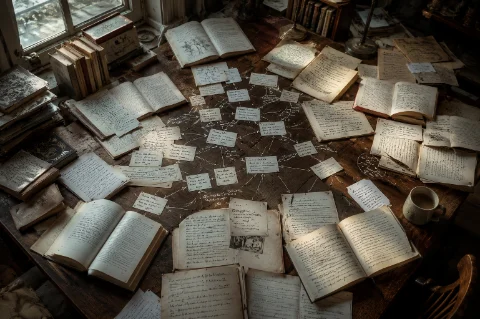
Think of your first draft as a field notebook. During excavation, archeologists jot observations, questions and guesses. You can do something similar.
Try this:
- Write field notes into the draft. Lines like “She has never sat in that chair since the accident” or “Something happened in the summer of 2004 at this bus stop” can sit in brackets or italics while you explore.
- Circle anomalies. If a character suddenly snaps or walks away from a scene, do not pull them back into your planned path. Mark it as an anomaly. Ask later what caused it.
- Allow broken scenes. End a scene in the middle of an argument or a phone call if that is as far as you can see clearly. Trust that more of the fossil will appear in later passes.
This way of drafting generates raw material that feels like it came out of the ground, not out of a presentation deck.
Revision As Restoration Work
Once you have unearthed your story, revision becomes a process of restoring and supporting the artifact so readers can see it clearly. You are not trying to make it flawless. You are trying to keep its character while making it readable.
In revision, focus on:
- Removing scaffolding, not bones. Cut the “as you know” speeches, the repeated explanations and the heavy hints that tell the reader what to think. Keep the strange small details that make the story feel specific.
- Respecting hairline cracks. Do not force every relationship into neat healing. Let a friendship stay slightly off. Let one question stay unanswered if that feels honest.
- Consolidating patterns. When you notice recurring images or gestures, lightly connect them so that the story feels intentional without turning into a lecture.
The aim is a story that carries its history in visible ways. You are giving the reader a clear view of the artifact, not sanding it into something generic.
Voice As Patina
Style often gets treated as decoration, but in this approach, voice is more like the patina on bronze. It is the surface sign that this story has lived a little.
You can encourage that patina by:
- Allowing some asymmetry. Mix short and long sentences. Let one or two sentences bend oddly if they feel true to the narrator’s way of seeing.
- Choosing specific sensory residue over generic description. Write the sound of a ceiling fan on its lowest speed, the smell of wet socks in a hostel corridor, the exact way your city’s light changes before a storm.
- Giving the narrator a sense of familiarity. Let the narrative voice speak like someone who has known this street, this family, this habit for years. They notice the most telling flaws and beauties.
The effect is a voice that feels like it belongs to a real observer inside the world, not a neutral outside camera.
Letting The Reader Do Some Digging
Stories that feel like artifacts invite readers to be active partners. You provide traces. They become co archeologists.
To support that:
- Leave room for interpretation. You do not have to answer every question. You just have to be honest about the ones you leave open.
- Echo themes instead of underlining them. If your story is about inheritance, show objects passed down, patterns repeated, debts called in. You do not need a character to announce “This is about legacy.”
- Craft scenes that can be read more than one way. A mother who seems controlling might also be terrified. A silence between two characters might be resentment and also protection. Do not rush to label.
Readers who enjoy this mode of fiction will feel trusted. They are allowed to bring their own tools and dig where they are curious.
A Short Exercise To Try Today
If you want to feel this shift in your own writing, here is a quick exercise you can complete in one session.
- Choose a relic
Pick one object that feels like it belongs in a story. A key, a receipt, a tiffin box left on a train, a library card with one name crossed out. - Write ten minutes of field notes
Describe only what you can see, smell or touch. No backstory. No explanation. Treat it like evidence on a table. - Ask three questions
What is the worst memory attached to this object? Who would be angry if it went missing? How long has it been waiting here? - Draft a middle scene
Write a scene where the object is already part of normal life. Characters handle it, ignore it or avoid it. Do not explain why. Let history leak through behavior and dialogue. - Stop before the explanation
End the scene just before someone finally explains the full story behind the object. Leave that silence. Sit with the tension.
Run this exercise a few times and you will notice your instincts changing. You will start to feel less like a builder and more like someone uncovering something that was always there, waiting for you to notice.