Why You Need To Write - Let The Storyteller in You Emerge
Long before books existed, stories were how people connected. Stories taught lessons, preserved history, and inspired change. Storytelling is woven into who we are as human beings.

Browse author-written articles filed under Writing Life. Reading tips, author stories, book lists, and more — all from voices within the Indie Reading Community.
Long before books existed, stories were how people connected. Stories taught lessons, preserved history, and inspired change. Storytelling is woven into who we are as human beings.
Writer's block is not a creativity problem. It is almost always a fear problem, a structure problem, or a burnout problem. Once you know which one you are dealing with, fixing it becomes a lot more straightforward than staring at a blank page hoping for inspiration.
Readers do not just follow your story. Their brains live inside it. Here is what neuroscience and narrative psychology tell us about why some fiction grips readers completely — and how you can write that way on purpose.
Writing the book is only half the job. The other half is everything that happens after you type the last word. Here is what every indie author needs to know about editing, publishing, freelancing, and building a writing career that actually lasts.
The story has not changed. What has changed is everything around it. Here is how writers are using new technology, virtual worlds, and advanced dramatic craft to tell stories that could not have existed ten years ago.
A weak villain drags your entire story down. A great villain makes your protagonist feel necessary. Here is how to build an antagonist readers will remember long after the last page.
The unreliable narrator depends on a strange contract. The reader has to trust the voice enough to keep listening while the story quietly builds the case that the voice cannot be trusted at all. Get that balance wrong and the twist either lands as a cheap trick or loses the reader's patience long before it arrives.
The best dialogue in fiction is never about what characters say. It's about what they refuse to say. Here's how to write the tension that lives between the lines.
Every great novel has something to say beneath the plot. That argument is your thematic statement, and it may be the most important sentence you write before Chapter One.
Stop telling readers how your characters feel. Discover the power of the objective correlative, a master-level creative writing technique that allows you to project raw human emotion directly onto the physical world.
Want your third-person prose to pulse with character voice? Learn how to master free indirect discourse, the subtle art of blending character voice with third-person narrative, and make your fiction irresistible.
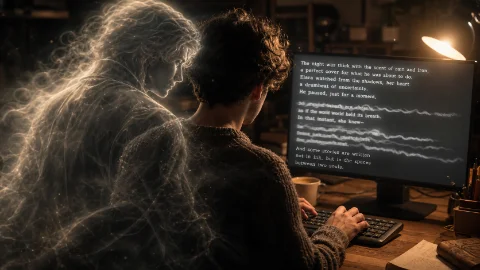
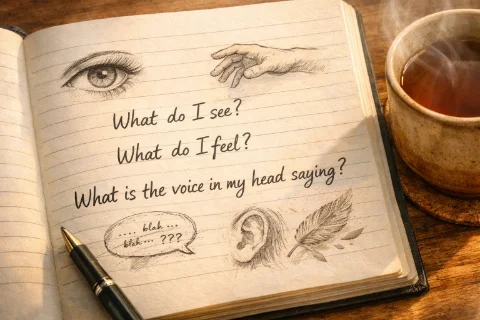
Learn how to write from inside your character’s perspective. Master deep point of view, character interiority, and the art of capturing the voice in their heads to create immersive fiction readers can’t put down.