Rhythmic Disruption: How to Use Sentence Cadence to Signal Emotional Shifts
Want readers to feel exactly what your characters feel? Stop relying on emotional adjectives and start changing the rhythm of your sentences.
Browse author-written articles filed under Writing Life. Reading tips, author stories, book lists, and more — all from voices within the Indie Reading Community.
Want readers to feel exactly what your characters feel? Stop relying on emotional adjectives and start changing the rhythm of your sentences.
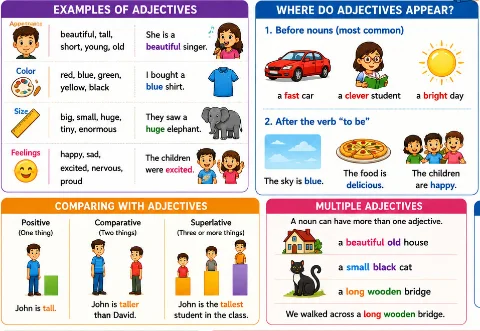
Adjectives add detail and description to nouns. Learn how adjectives work with simple explanations and everyday examples.
Sometimes the most important chapter in a novel is the one readers almost forget. That is exactly why it works.
Sometimes a sentence speaks with two voices at once. One voice says the thing. The other quietly questions it.
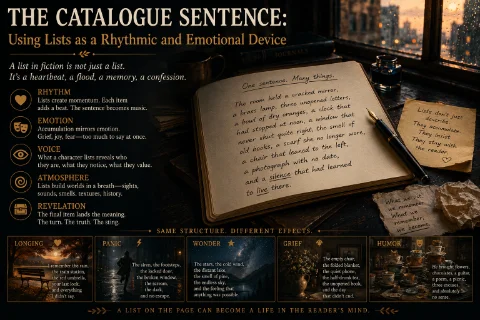
A list in fiction is not always a list. Sometimes it is a heartbeat, a memory, a confession, a flood, or the sound of a character trying to hold everything at once.
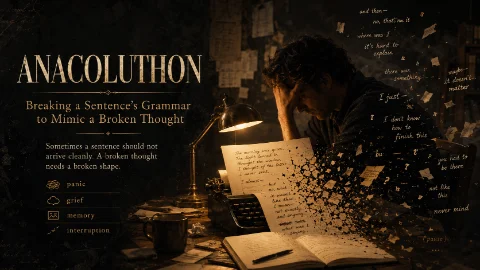
Sometimes a sentence should not arrive cleanly. A broken thought needs a broken shape.
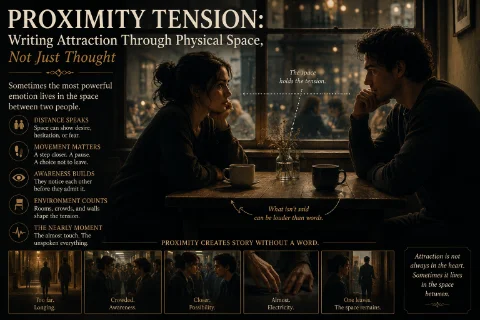
Sometimes attraction is not in what characters think. It lives in where they stand, how close they move, and the space neither of them crosses.
Some narrators don't read like writing at all. They read like someone talking. Here's how that effect is built.
Not every story needs a villain, a battle, or an argument. Some stories move forward through contrast, discovery, and revelation instead of conflict.
Every powerful story has a moment when the character can still turn back. Then something happens, and emotionally, they never can again.
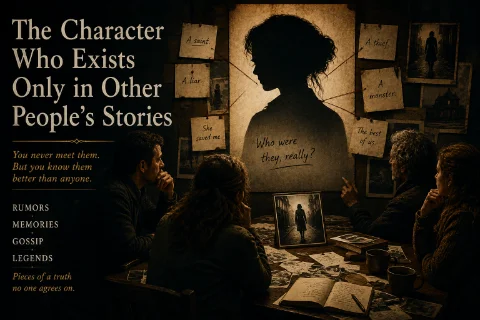
Some characters never enter the room. They arrive through rumor, memory, blame, love, fear, and the stories other people tell about them.
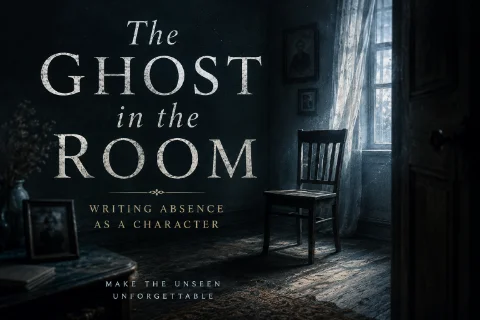
No one mentioned her anymore. Yet every chair in the house seemed to know exactly where she used to sit. Some absences leave. Others stay and learn how to haunt the living.