Story as Artifact: Writing Fiction That Feels Discovered Rather Than Written
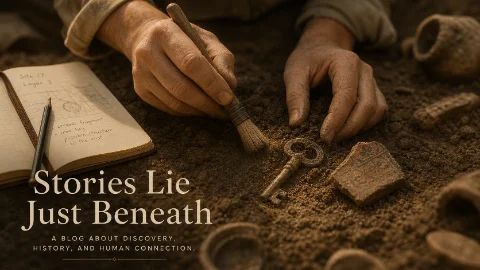
What if your stories felt unearthed instead of assembled? Story as artifact invites you to excavate fiction rather than manufacture it.
Everything tagged fiction writing — articles written by indie authors and readers on topics that matter to the community.
What if your stories felt unearthed instead of assembled? Story as artifact invites you to excavate fiction rather than manufacture it.
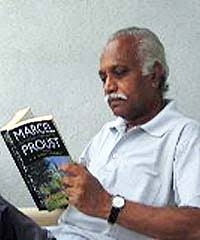
Unlike the visual arts, as the written words cannot be appraised on espial, writers have always been handicapped in the arena of recognition, and if anything, in the world of printed words, the publisher-media nexus dealt them a double whammy, more so in the recent past. With this vexatious commercial nexus pitchforking their favoured folks, aided by the literary editors, as published authors into the public limelight, the genuine writers got relegated into the scornful arena of self-publishing
Writing a book is like planting a seed. And if it gets published, it’s like the sprouting of a plant. If not, it’s a lonely furrow in a no-man’s land. Like the gardener tends the plant into a tree, it’s the readers who help the book grow in stature. Blessed are the authors who would be able to live long enough to smell that their readers savored the fruits of their creativity.
Those who treat writing as a vehicle of visibility would be incapable of experiencing the joy of the journey. In the end though, were they to come into spotlight, they might well gloat in the limelight though without experiencing the real thrill of letters. Even in case such won’ make it to the post; their pain cannot be intense for they wouldn’t have felt the joy of writing either.
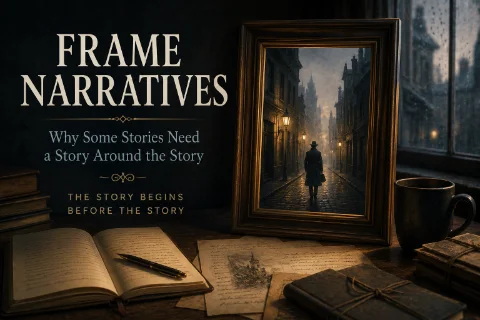
A frame narrative is a story with a doorway before the story begins. Someone remembers, confesses, discovers a letter, or passes on a tale. That outer layer changes everything. It makes the main story feel older, stranger, and more meaningful because the reader is not only asking what happened, but why it is being told now.
Some stories feel like they were always meant to end exactly the way they did. That sense of inevitability is rarely an accident. It is often the quiet work of chiastic structure, a mirror pattern woven into the story's bones that most readers feel without ever knowing its name.
The hero's journey describes a transformation through ordeal, given narrative shape. Understanding it as a description rather than a checklist is what makes it actually useful.
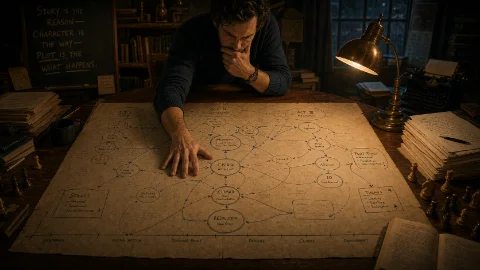
A great plot does not just move forward. It moves with purpose. Every scene earns its place, every twist pays off something planted earlier, and by the last page, the reader feels it could not have ended any other way. Here is how to build that.
Before beat sheets and structural diagrams, there is this simpler shape. Every elaborate framework writers study is built on top of beginning, middle, and end, and returning to this foundation is often the clearest way to fix a story that feels structurally lost.
The story has not changed. What has changed is everything around it. Here is how writers are using new technology, virtual worlds, and advanced dramatic craft to tell stories that could not have existed ten years ago.
A weak villain drags your entire story down. A great villain makes your protagonist feel necessary. Here is how to build an antagonist readers will remember long after the last page.
The unreliable narrator depends on a strange contract. The reader has to trust the voice enough to keep listening while the story quietly builds the case that the voice cannot be trusted at all. Get that balance wrong and the twist either lands as a cheap trick or loses the reader's patience long before it arrives.