Sensory Anchors: Using One Specific Smell or Sound to Ground Abstract Emotion
Emotion becomes more powerful when readers can sense it. One smell or sound can carry more feeling than a paragraph of explanation.
Browse author-written articles filed under behind-the-book. Reading tips, author stories, book lists, and more — all from voices within the Indie Reading Community.
Emotion becomes more powerful when readers can sense it. One smell or sound can carry more feeling than a paragraph of explanation.
What if your stories felt unearthed instead of assembled? Story as artifact invites you to excavate fiction rather than manufacture it.
Sometimes the narrator does not stay outside the story. Sometimes the voice reaches in, touches the world, and reminds readers that fiction has walls.
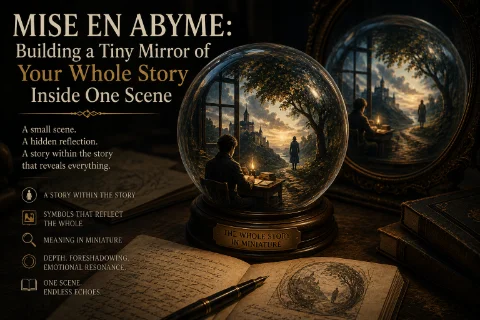
Sometimes one small scene contains the whole story in miniature. A broken toy, a painting, a dream, or a tale within the tale can quietly reveal everything.
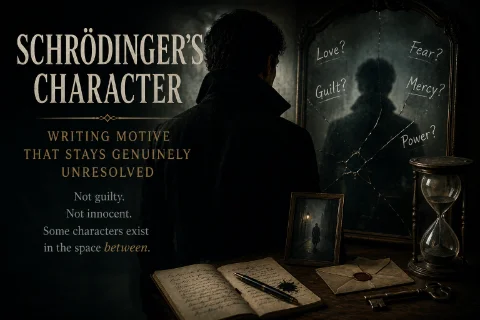
A character acts, but the motive remains locked. Was it love, guilt, selfishness, fear, or mercy? Unresolved motive keeps a character alive after the final page because the reader is left holding more than one truth at once.
A knight beneath fluorescent lights. A queen speaking in modern slogans. A clock appearing centuries too early. Anachronism is often treated as a mistake, but in skilled hands it becomes a storytelling device. The wrong detail in the wrong time can reveal deeper truths, connecting past and present in ways strict accuracy never could.
But what a poetic justice it was that the publishers’ apathy, for my literary foray into an uncharted fictional arena, pushed me into Roopa’s despondent shoes, leg for leg! So to say, to atone for myself, and to earn for her the empathy, at least, of a few discerning readers, I self-published it, and it's gratifying to me that it has earned some literary acclaim in the digital world of ebooks.
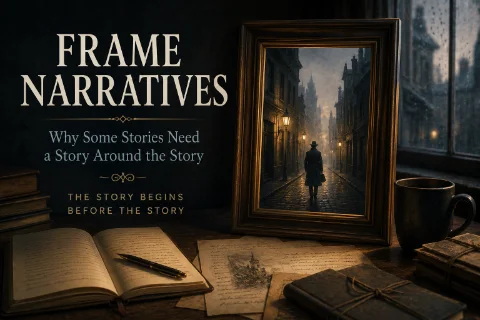
A frame narrative is a story with a doorway before the story begins. Someone remembers, confesses, discovers a letter, or passes on a tale. That outer layer changes everything. It makes the main story feel older, stranger, and more meaningful because the reader is not only asking what happened, but why it is being told now.
Learn delayed decoding, the technique behind Joseph Conrad's most disorientating scenes, and how to use it to put readers inside a character's confusion without ever losing them.
Every story that falls apart does so for the same reason: one of its links is broken. Character without desire goes nowhere. Stakes without obstacles feel hollow. Climax without setup lands flat. Here is how to build the chain that holds your novel together.
Some stories feel like they were always meant to end exactly the way they did. That sense of inevitability is rarely an accident. It is often the quiet work of chiastic structure, a mirror pattern woven into the story's bones that most readers feel without ever knowing its name.
The hero's journey describes a transformation through ordeal, given narrative shape. Understanding it as a description rather than a checklist is what makes it actually useful.