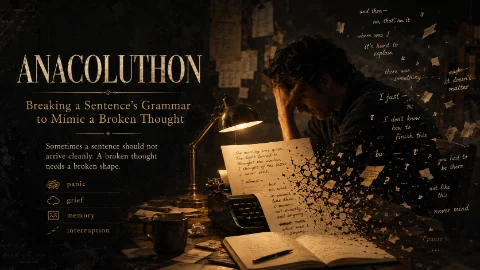
Anacoluthon: Breaking a Sentence's Grammar to Mimic a Broken Thought
Sometimes a sentence should not arrive cleanly. A broken thought needs a broken shape.
Everything tagged writing tips — articles written by indie authors and readers on topics that matter to the community.
Sometimes a sentence should not arrive cleanly. A broken thought needs a broken shape.
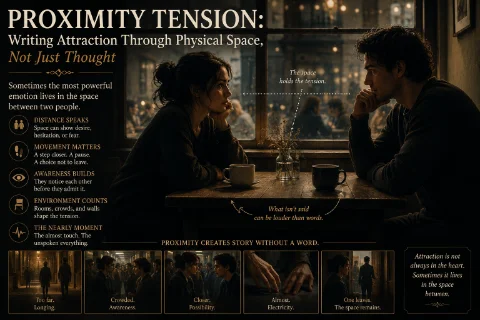
Sometimes attraction is not in what characters think. It lives in where they stand, how close they move, and the space neither of them crosses.
Some narrators don't read like writing at all. They read like someone talking. Here's how that effect is built.
Not every story needs a villain, a battle, or an argument. Some stories move forward through contrast, discovery, and revelation instead of conflict.
Those who treat writing as a vehicle of visibility would be incapable of experiencing the joy of the journey. In the end though, were they to come into spotlight, they might well gloat in the limelight though without experiencing the real thrill of letters. Even in case such won’ make it to the post; their pain cannot be intense for they wouldn’t have felt the joy of writing either.
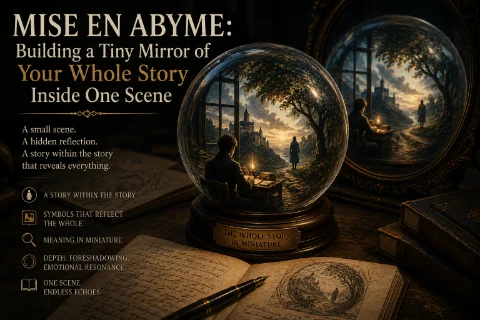
Sometimes one small scene contains the whole story in miniature. A broken toy, a painting, a dream, or a tale within the tale can quietly reveal everything.
Every powerful story has a moment when the character can still turn back. Then something happens, and emotionally, they never can again.
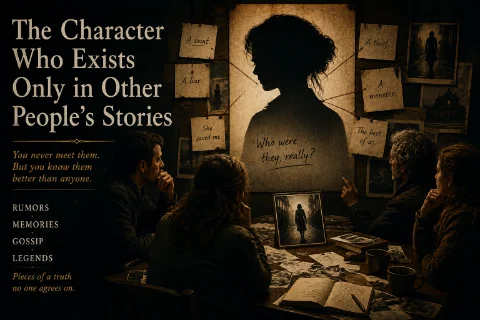
Some characters never enter the room. They arrive through rumor, memory, blame, love, fear, and the stories other people tell about them.
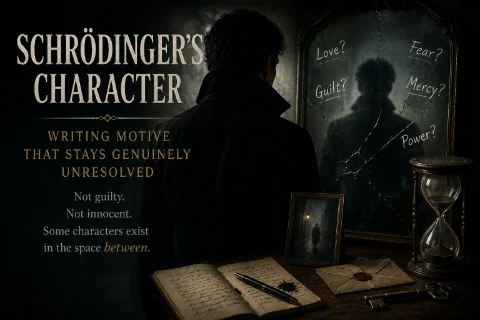
A character acts, but the motive remains locked. Was it love, guilt, selfishness, fear, or mercy? Unresolved motive keeps a character alive after the final page because the reader is left holding more than one truth at once.
A knight beneath fluorescent lights. A queen speaking in modern slogans. A clock appearing centuries too early. Anachronism is often treated as a mistake, but in skilled hands it becomes a storytelling device. The wrong detail in the wrong time can reveal deeper truths, connecting past and present in ways strict accuracy never could.
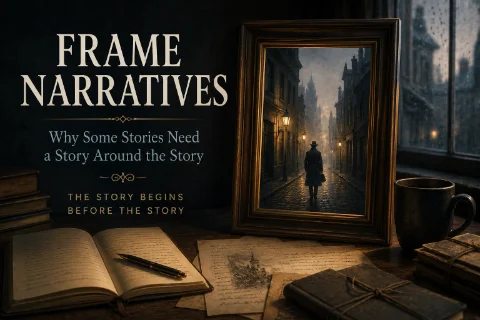
A frame narrative is a story with a doorway before the story begins. Someone remembers, confesses, discovers a letter, or passes on a tale. That outer layer changes everything. It makes the main story feel older, stranger, and more meaningful because the reader is not only asking what happened, but why it is being told now.
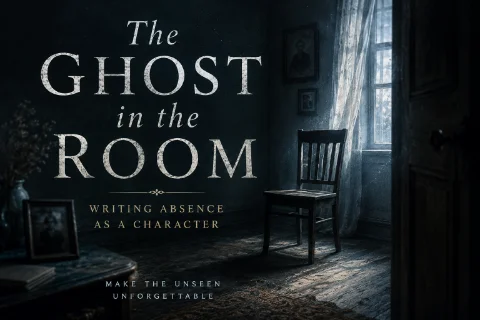
No one mentioned her anymore. Yet every chair in the house seemed to know exactly where she used to sit. Some absences leave. Others stay and learn how to haunt the living.